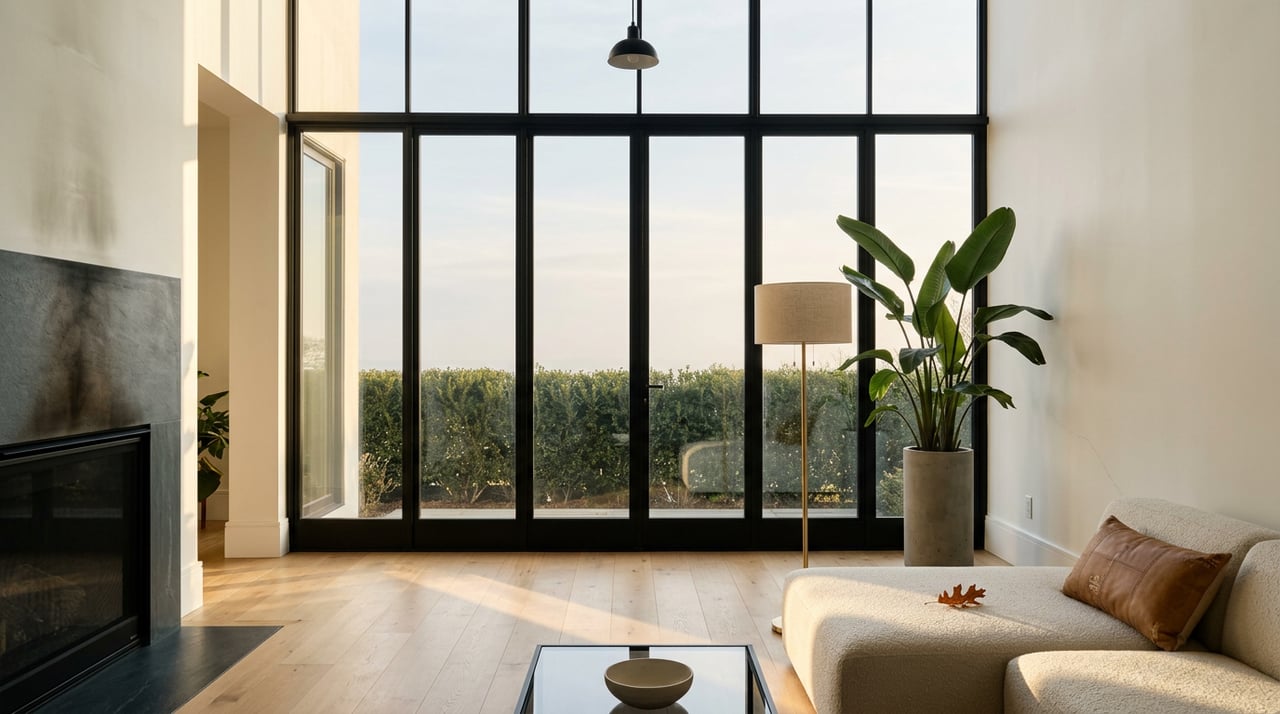
Port Washington's Real Estate Split Isn't About Schools. It's About Acreage.
On April 24, a five-bedroom house on Cornwells Beach Road in the Sands Point section of Port Washington closed at $3,500,000. Five days later, a six-bedroom colonial on Cedar Lane, also in Sands Point, closed for $3,325,000. Roughly two months after that, a one-bedroom unit at Toms Point Lane in the Manorhaven section, less than two miles away, closed at $560,000 after 96 days on market.
All three carry the same mailing address: Port Washington, NY 11050. All three feed the same public school system. None of that explains the gap.
Buyers relocating to the North Shore tend to assume a price spread this wide means a school-quality spread underneath it. That assumption holds in some Long Island markets, where a hamlet's median price tracks almost exactly with which elementary school a child will attend. It does not hold here. Every one of Port Washington's sub-villages, from a Manorhaven bungalow to a Sands Point estate, sends its students into the same administration: the Port Washington Union Free School District, which serves the hamlet of Port Washington and the incorporated villages of Baxter Estates, Manorhaven, Port Washington North, and Sands Point, along with portions of Flower Hill and Plandome Manor.
What separates a $560,000 condo from an $8 million waterfront lot isn't the district office. It's the zoning code sitting one layer below it, written and enforced by five separate village governments that share a school system but do not share a rulebook on how much land a house is required to sit on.
Port Washington is a hamlet directly governed by the Town of North Hempstead, but tucked inside its borders are four fully incorporated villages, each with its own elected board, its own building department, and its own zoning ordinance. Baxter Estates incorporated in 1931, partly to avoid annexation by its neighbor Manorhaven, which had incorporated the year before after breaking with the town's zoning code. Sands Point and Port Washington North followed similar paths. Each village kept its own authority over lot sizes, setbacks, and building permits. None of them touch how children are assigned to school.
That split matters more than most buyers expect, because in this market, the zoning line does more to set price than the school line does.
| Sub-area | Governing body | Residential zoning minimum | Recent median sale | What buyers notice first |
|---|---|---|---|---|
| Sands Point | Incorporated Village of Sands Point | 1, 2, or 5 acres depending on district | $8.3M (March 2026) | Acreage, privacy, water frontage |
| Port Washington North | Incorporated Village of Port Washington North | Smaller, denser village lots | $1.3M (February 2026) | Compact lots, shorter commute to Main Street |
| Manorhaven | Incorporated Village of Manorhaven | Mixed single-family and multi-family, no acreage minimum | Homes and co-ops well below the hamlet median | Bay access without the acreage requirement |
| Baxter Estates | Incorporated Village of Baxter Estates | Village-controlled, small footprint (109 acres total) | Limited inventory, walk-to-train premium | Proximity to the Port Washington Public Library and Main Street |
| Unincorporated hamlet | Town of North Hempstead | Town zoning | Blends with the overall Port Washington median of $1.5M (three months ending May 2026) | Direct LIRR access, Main Street walkability |
The overall Port Washington median of $1.5 million, reported for the three months ending May 2026, is an average of these five very different rulebooks. Reading it as a single number the way a portal search does erases the mechanism that actually produces it.
Sands Point's zoning code separates the village into Residence A, B, and C districts. Residence B requires one acre of lot area per single-family home. Residence A requires two. In 2023 and again in 2024, the village board amended the code to create a new tier requiring five acres on certain undeveloped parcels, with the stated goal to "maintain the rural estate character of the Village" and protect its water supply.
That water-supply language isn't decoration. The village board's own findings cite pumpage caps imposed by the New York State Department of Environmental Conservation and note that Sands Point borders a hydrogeologic zone where the state requires strict controls on groundwater use. Reduce the number of buildable lots and you reduce water demand. You also reduce the number of homes that can ever compete for the same buyer pool, which is a direct input into price, not a side effect of it.
The village's zoning board can grant variances down to one acre in areas where the surrounding lots are already smaller, and building coverage is capped on a sliding scale, 12 percent of a lot's first acre, 8 percent of the second, 6 percent beyond that. A buyer touring a five-acre Sands Point listing is paying for land that the code itself keeps scarce, not for a better assignment letter from the district office.
Manorhaven sits on the same peninsula, feeds the same district, and carries none of Sands Point's acreage requirements. Its housing stock mixes bungalows, Cape Cods, and two-family colonials with waterfront co-ops like Toms Point Cooperative, which offers residents a private beach, kayak storage, and mooring rights without the multi-acre lot a Sands Point listing would require. Manorhaven Beach Park adds a pool complex, a sandy beach, and courts for basketball, tennis, and bocce, all reachable on foot from most of the village. North Shore Yacht Club, founded in 1871, still runs boat storage and sailing programs a short walk or bike ride from Manorhaven Boulevard's restaurants.
None of that changes which middle school a Manorhaven child attends. It does change what a buyer's dollar is doing. In Sands Point, the dollar is buying land the code has made scarce. In Manorhaven, it's buying bay access and a shorter walk to a beach club, on a lot the code never restricted to acre minimums in the first place.
Baxter Estates splits the difference in a different direction. At 109 acres total, it's one of the smallest of Port Washington's villages, built around the watershed at Baxter's Pond and within walking distance of Main Street and the Port Washington Public Library. Its own building department controls permits for the village's small housing stock, which means renovation timelines and approval processes run through a village office rather than the town, a distinction sellers here often don't think to ask about until they're mid-renovation.
The one variable that doesn't move across any of these villages is the train. The Port Washington Branch is the LIRR's terminus, and unlike some other lines on the system, it runs express, non-stop service into Penn Station without a changeover. Whether a buyer closes on a Sands Point estate or a Manorhaven co-op, that commute doesn't change. That constant is worth naming precisely because it's so easy to assume the opposite, that a shorter walk to the platform explains part of the price gap the way it might in a market with multiple competing stations.
For a relocating family comparing Port Washington to nearby North Shore hamlets, the practical takeaway is straightforward. If the district's academic profile is the deciding factor, that factor holds constant no matter which of these five governments issues the building permit. What changes is lot size, water access, walkability to Main Street, and the pace at which village hall processes a renovation. Those are the variables worth pricing in, not the school assignment a portal search implies is doing the work.
Does moving between Sands Point and Manorhaven change a child's school? No, both feed Port Washington Union Free School District, and all students converge at Carrie Palmer Weber Middle School and Paul D. Schreiber Senior High School regardless of which village they start in. Elementary assignment can still vary by neighborhood attendance zone, so it's worth confirming with the district directly for a specific address.
Why did Sands Point raise its lot-size minimum instead of leaving zoning as is? The village board's stated rationale ties directly to state-imposed water pumpage caps and the village's location within a protected hydrogeologic zone, not to school capacity or enrollment pressure.
Does a larger zoning minimum guarantee a higher resale price down the road? It supports a price floor by constraining how many homes can ever be built on a given footprint, but it's a tradeoff, not a guarantee. Buyers give up walkability and density in exchange for acreage, and that tradeoff appeals to different households for different reasons.
If you're comparing Port Washington's villages against each other, or against Manhasset, Locust Valley, or Garden City, the zoning layer is the piece most portal searches skip entirely. Annie Holdreith has spent nearly three decades reading exactly this kind of local detail into a pricing strategy. Request a personalized valuation & launch plan to see what it means for your specific address.
Stay up to date on the latest real estate trends.
In a competitive real estate market, Annie is the Trusted Real Estate Advisor who will guide you to success. When you work with her, you have a calm, respected, seasoned professional with a proven track record by your side every step of the way.
Annie Holdreith
[email protected]
516.509.4082
License #10301201745
364 Plandome Rd Manhasset NY 11030