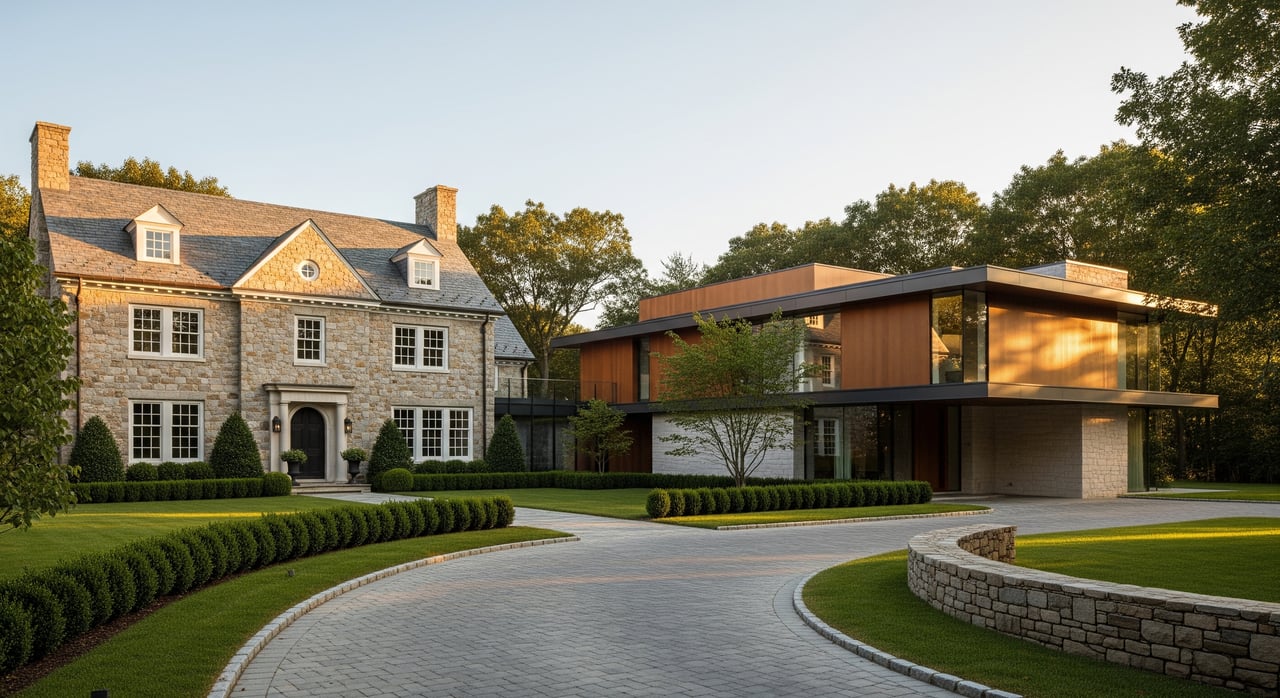
New Construction vs Resale Homes in Brookville
Should you build your dream estate from the ground up or buy an existing Brookville home with instant curb appeal? It is a big decision with real money, time, and lifestyle tradeoffs. You want privacy, quality, and a smooth path to closing without surprises. In this guide, you will see how new construction and resale compare in Brookville so you can choose with confidence. Let’s dive in.
Brookville is known for large lots, mature trees, and a quiet, residential feel. Many buyers in this market value privacy, long driveways, and established neighborhood character. You will also notice higher expectations for finishes, systems, and site work at this price point.
Local rules matter. Village zoning, lot coverage limits, height rules, and setbacks shape what you can build and where it sits on the lot. Approvals can involve the Village of Brookville boards and the Town of Oyster Bay building department. New construction can also trigger a property tax reassessment in Nassau County. Plan for these items early.
Flood risk is typically lower than coastal areas because Brookville sits inland, but it is still wise to verify floodplain status before you commit to a site. Utility capacity for high-end features, such as whole-house generators or large pool systems, should also be confirmed.
If you need to move sooner, resale is usually faster. A typical resale purchase closes in about 30 to 60 days after contract, depending on financing and negotiations. If you plan renovations, add that time separately.
New construction is a longer journey. For a custom luxury home in Brookville, you commonly see 12 to 24 months from permit to completion. Semi-custom or spec homes can be faster at 6 to 12 months, while complex sites or design changes can extend to 24 to 36 months.
Several variables influence your schedule: site conditions, needed variances, the builder’s backlog, design complexity, subcontractor availability, and weather. Municipal calendars also matter. Board meeting schedules and submission cutoffs can add weeks or months. Tree removal rules or neighbor appeals can extend the process on wooded estate lots.
A resale skips the pre-permit design and review cycle. If you accept the home as it is, your timing is driven by mortgage underwriting, inspections, and agreed repairs. You can plan cosmetic updates after closing or phase larger projects over time.
Before you file for permits, expect a due diligence phase. Typical pre-development steps include a site survey, topography, soils or geotechnical review, and tree survey. You will also review septic or sewer status, utility availability, and any wetlands or floodplain questions.
Municipal approvals may involve village planning or architectural review and zoning compliance. If you need a variance, build in extra time. You then apply for building permits through the Town of Oyster Bay and schedule required inspections as work proceeds.
You cannot occupy the home until you have a Certificate of Occupancy or a Temporary CO. To avoid delays, align your design team, builder, and permit path early. Ask for realistic timelines that reflect actual meeting schedules, not just best-case estimates.
During a new build, municipal inspections occur in stages. Common milestones include footing and foundation checks, waterproofing and backfill, framing, and rough-ins for electrical, plumbing, and HVAC. You will see inspections for insulation and energy code compliance, followed by final inspections and CO issuance.
Even with municipal oversight, many buyers hire a third-party inspector or construction consultant. Staged inspections at pre-pour, pre-drywall, and pre-closing help verify that your specifications and allowances are met. Independent eyes can catch workmanship issues early and reduce change-order disputes.
For resale, a standard buyer inspection covers structure, roof, mechanicals, plumbing, and electrical. Specialty inspections are common based on the home’s age and features, such as septic or sewer, chimney, pool, pest, lead, mold, asbestos, or radon. You can negotiate credits or repairs based on the report.
Most reputable builders follow a 1-2-10 structure: typically 1 year for workmanship and materials, 2 years for systems, and 10 years for major structural defects. Many use third-party warranty programs. Review coverage details and exclusions closely. Ask about the claim process and whether you will have an 11 to 12 month warranty walkthrough to address items that appear after initial settling.
Resale homes may include a seller-provided home warranty as part of negotiations, but it is not automatic. Transferable manufacturer warranties for appliances or systems may add protection if still in term.
A new build lets you dial in everything: layout, materials, smart home systems, and indoor-outdoor flow. The tradeoff is cost control. Builders often use allowances for kitchens and baths. Upgrades beyond those allowances are billed as change orders and can add up. Make decisions early and keep a tight specification package to avoid surprises.
Resale estates often come with mature landscaping, established hardscaping, and existing amenities. You get immediate privacy and curb appeal that would take years to recreate. You can renovate in phases and target the rooms that will give you the most impact first.
On larger, wooded lots, stormwater management, grade changes, and tree removals can be a significant line item for new builds. Plan for drainage systems, retaining walls, and irrigation where needed. Replicating the look and screening of a decades-old landscape takes time and maintenance.
A well-sited, high-end custom home on a desirable Brookville lot tends to hold value when the design fits the neighborhood. Over-improving relative to nearby properties can make resale harder. Balance modern features with a scale and placement that respect the setting.
You typically negotiate price, repairs or credits, closing date, included personal property, and standard contingencies. In low-inventory pockets, leverage is tighter. Properties on the market longer may be more flexible.
With custom builds, negotiation often centers on allowances, what site work is included, responsibility for unforeseen conditions, and completion timelines. Base price may be less flexible, but builders might consider specific upgrades, appliance packages, landscaping, or financing incentives on spec or semi-custom homes.
Ask for a detailed specification sheet and allowance schedule attached to the contract. Clarify the change-order process, pricing, and approvals. Discuss liquidated damages or completion-date penalties if the builder misses agreed milestones. Build in contingencies for permit or variance approvals within a defined window.
New construction commonly uses construction-to-permanent loans with lender inspections at each draw. That affects cash flow and timing. Resale purchases usually follow conventional underwriting with an appraisal. If comps are thin, appraisal results can become a negotiation point.
New construction typically increases assessed value. In Nassau County, expect the assessor to adjust your property’s assessment after completion. Ask how timing works and what options exist for appeals. School district and municipal rates influence the final tax burden.
New systems can help with insurability, but regional wind and hurricane exposures still apply on Long Island. Even inland properties can be affected during major storms. Resale homes may need system upgrades for insurance acceptance, such as addressing older wiring or roof issues.
Confirm whether the property is on public sewer or septic, and plan the approval path if septic applies. Verify capacity for high-demand features like a pool, heated driveway, or a large generator. Early coordination helps avoid rework.
When you look ahead to eventual resale, consider how the home fits the local pattern: lot size, privacy, and scale. Document your builder’s portfolio and comparable sales for recent new construction in Brookville to support future marketability.
Choose new construction if you want:
Choose resale if you want:
You do not have to choose between speed and control. You can choose the path that matches your timeline, appetite for project management, and the way you want to live on a Brookville lot. If you would like help mapping that decision to real properties and builders, connect with Annie Holdreith for a private consultation.
Stay up to date on the latest real estate trends.
In a competitive real estate market, Annie is the Trusted Real Estate Advisor who will guide you to success. When you work with her, you have a calm, respected, seasoned professional with a proven track record by your side every step of the way.
Annie Holdreith
[email protected]
516.509.4082
License #10301201745
364 Plandome Rd Manhasset NY 11030