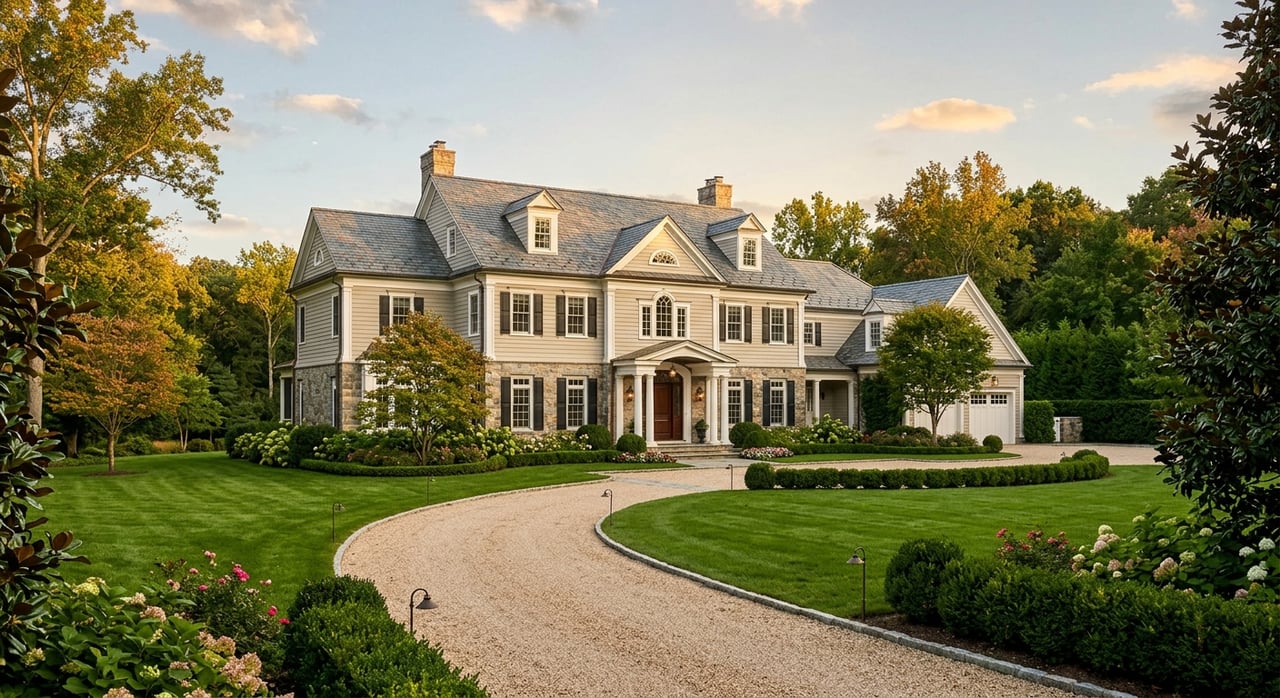
What Move-Up Buyers Should Know About Locust Valley Homes
If you are thinking about making a bigger move on the North Shore, Locust Valley deserves a close look. This is a market where a move-up purchase can mean more land, more privacy, a different commute routine, or simply a better fit for how you want to live day to day. The details matter here, and understanding the market before you start touring can help you make smarter decisions with less stress. Let’s dive in.
Locust Valley is an unincorporated hamlet in the Town of Oyster Bay that is often described as part of the Gold Coast. Locally, it is known for rolling hills, two-lane roads, wooded surroundings, and a small business district connected to the Long Island Rail Road. For many move-up buyers, that mix creates a setting that feels tucked away while still offering practical access points for daily life.
This is not a one-size-fits-all market. In Locust Valley, you can find a smaller in-town house, a classic Colonial on a larger lot, or a more substantial estate property on private acreage. That range is a big part of the appeal if your current home no longer fits your space needs or lifestyle goals.
The current home value index for Locust Valley is $1,196,003, which is up 4.6% year over year. For move-up buyers, the most relevant pricing band is generally about $1 million to $3 million, although the broader market stretches both below and well above that range.
Recent examples help show how wide the spread can be. Current and recent listings include a $499,000 smaller village house, a pending $999,000 home on 1.35 acres, homes around $1.15 million to $1.26 million, larger properties from $2.7 million to $4 million, and estate listings above $8.8 million. In practical terms, your budget in Locust Valley may buy very different kinds of properties depending on lot size, setting, and house style.
Inventory is limited, which is important if you are moving up and hoping to be selective. Zillow currently shows 25 active results in Locust Valley, including 21 single-family homes. That means you may not have many direct substitutes if a particular home checks your boxes.
This limited supply also helps explain why timing matters. Some homes appear and gain attention quickly, while others stay on the market longer, especially when pricing, condition, or uniqueness affect the buyer pool. For you, the key is to be ready without feeling rushed into the wrong fit.
If you are weighing several North Shore communities, Locust Valley sits in the middle of the local price spectrum. Nearby home value snapshots show Locust Valley at $1.196 million, compared with Lattingtown at $1.647 million, Sea Cliff at $1.100 million, Oyster Bay Cove at $2.304 million, Mill Neck at $2.132 million, and Glen Cove at $810,612.
That positioning matters for move-up buyers. Locust Valley can offer a step up in setting, lot options, and housing character while still landing below some neighboring luxury enclaves. If you are trying to balance budget with long-term value, this middle-ground pricing can make Locust Valley especially compelling.
One of the biggest choices you may face is not just the house, but the land that comes with it. In-town homes can sit on compact lots by North Shore standards, with examples around 6,970 square feet, 7,076 square feet, and 8,276 square feet. Those homes may offer a more manageable footprint and closer proximity to the village center and train.
At the other end of the spectrum, recent listings and sales include parcels of 1.35 acres, 1.75 acres, 3.06 acres, 4.01 acres, 8.53 acres, and even 18.11 acres. If you are moving up for privacy, outdoor space, or a more estate-like setting, that larger-lot inventory is a meaningful part of the Locust Valley story.
A smaller lot can make sense if you want less exterior upkeep and a more straightforward day-to-day routine. A larger property may offer the privacy and presence that many buyers want when they are making a significant step up in budget.
Neither option is better across the board. The right choice depends on how you actually live, how much maintenance you want to take on, and whether your next move is focused on convenience, scale, or both.
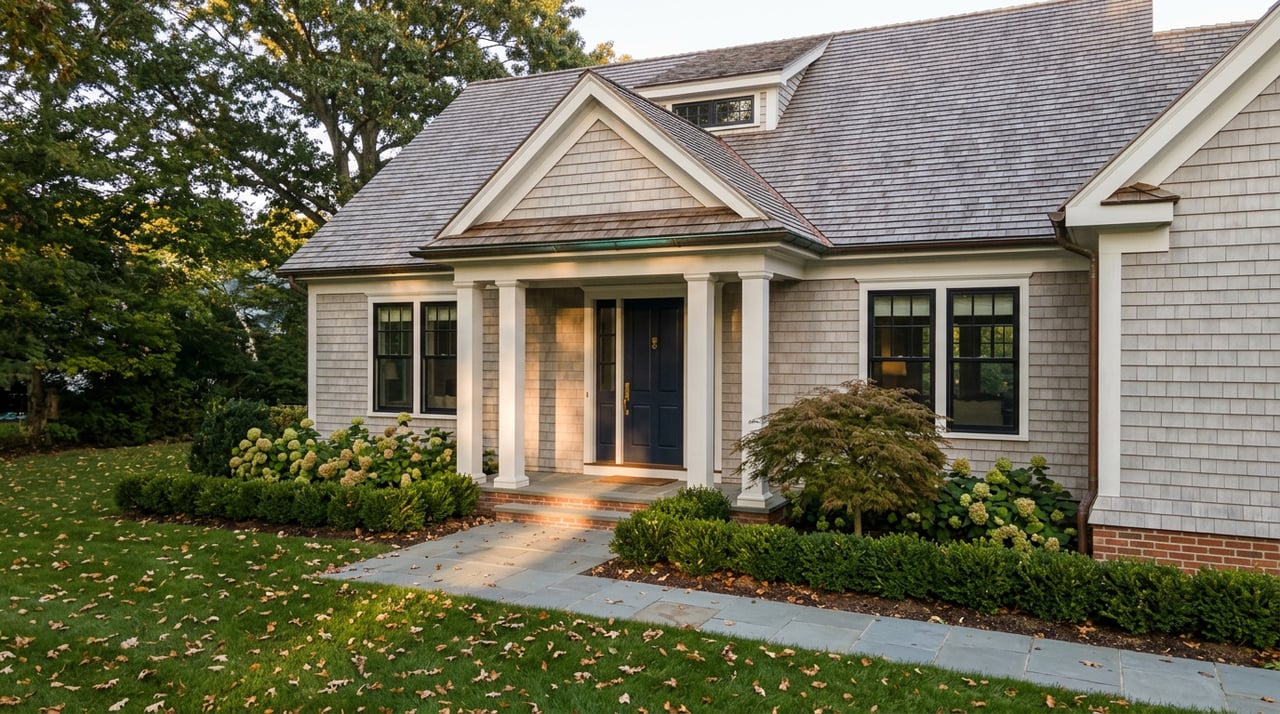
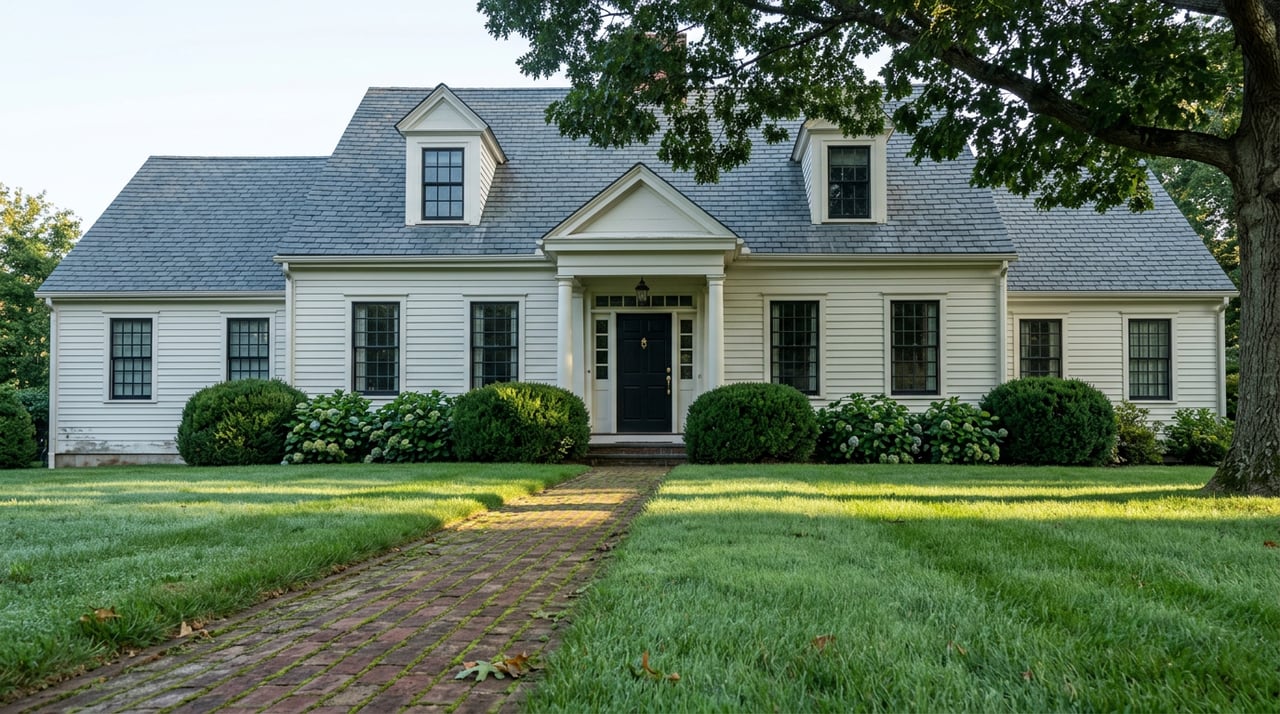
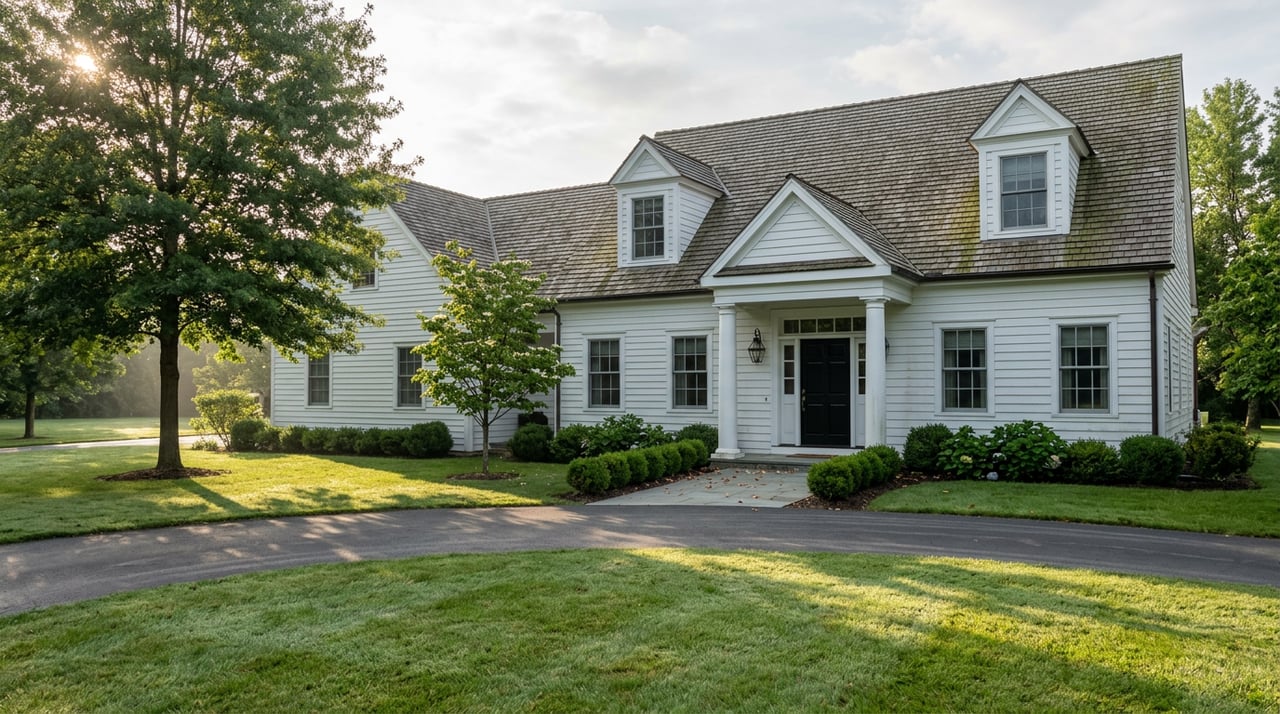
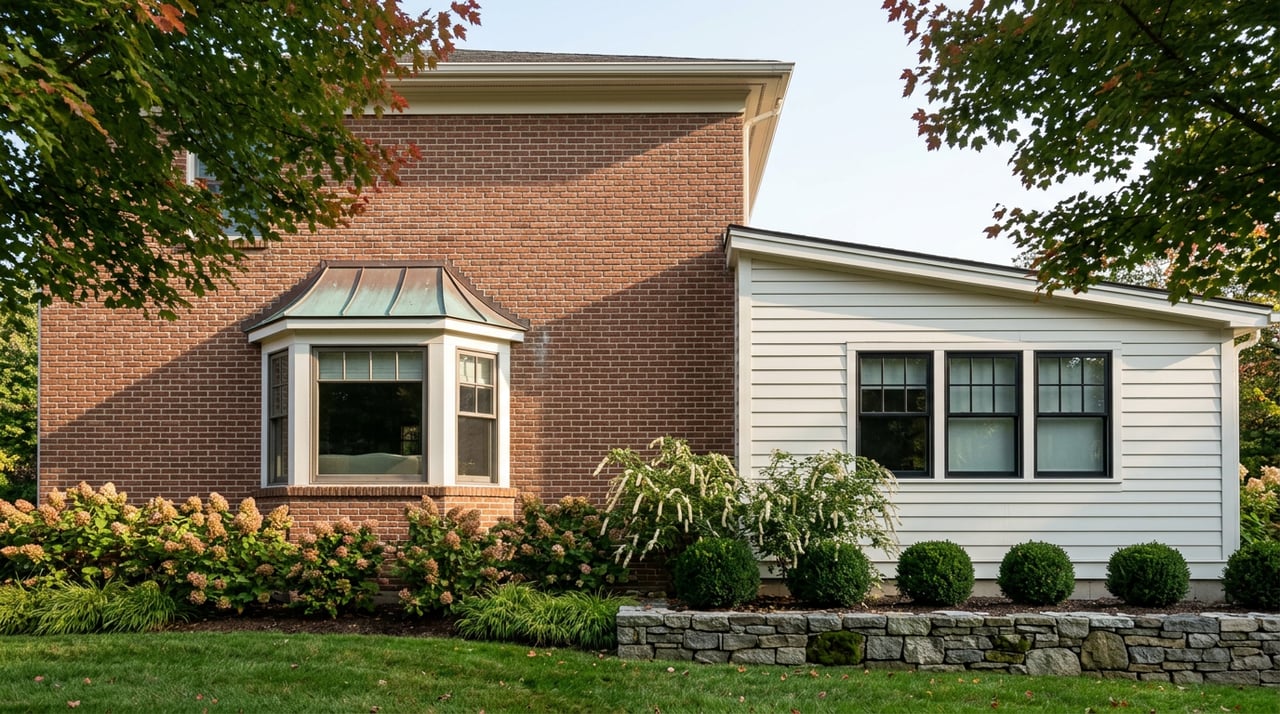
Locust Valley does not revolve around a single architectural style. Recent examples include a Cape/Colonial, a Hamptons-style colonial, a Colonial/Estate, a Tudor Revival manor, and an expanded ranch. That variety can work in your favor if you want a location with multiple lifestyle options rather than a uniform housing stock.
For move-up buyers, this means your search should focus on function first. You may find that the right floor plan, lot, and location come in a style you were not originally targeting. In a selective market, staying open to different house types can create more opportunities.
For many North Shore buyers, train access remains part of the decision. The Locust Valley LIRR station is on the Oyster Bay Branch and is an accessible station with ramps, tactile warning strips, audiovisual passenger information systems, ticket machines, and a waiting area. There is no ticket office.
The current branch timetable serves Penn Station and Grand Central, with many westbound trips routed through Jamaica for transfer options. If you commute regularly, or expect occasional city travel, it is worth reviewing how that branch pattern fits your actual schedule before you commit to a home.
Move-up buyers are often buying a daily experience, not just more square footage. In and around Locust Valley, recreation tends to center on preserved green space and estate-like grounds. That can be a strong plus if you want a quieter, more outdoors-oriented setting.
Bailey Arboretum is a 42-acre accredited arboretum in Locust Valley with marked trails and educational programs. Nearby preserves managed by the North Shore Wildlife Sanctuary, including Shu Swamp and Coffin Woods, are protected spaces open from dawn to dusk on most days except Friday. These kinds of amenities help shape the feel of living in the area.
In a low-supply market, the best homes can be hard to replace. Locust Valley currently shows signs of both quick-moving listings and longer-market-time properties. Some homes have been listed only briefly, while others, such as 47 Laurel Lane, have remained on the market for 536 days, and some current listings show price reductions.
That tells you something important. A strong, well-priced home may require quick action, while a more unique or higher-priced property may allow room for more negotiation. The market is selective, not uniform.
If you want to compete well in Locust Valley, focus on preparation before the right home appears:
Preparation matters because hesitation can cost you the right opportunity. At the same time, discipline matters because not every listing deserves a premium offer.
A move-up purchase usually involves more variables than a first home. You may be balancing timing, sale proceeds, commuting needs, lot size preferences, and renovation tolerance all at once. In Locust Valley, where supply is limited and the housing mix is broad, having a clear plan can make the process much more manageable.
Start by defining what “move-up” really means for you. For one buyer, that may be acreage and privacy. For another, it may be a better layout, a more convenient train routine, or a home with stronger long-term flexibility.
From there, evaluate each listing through three practical lenses:
When you approach the search this way, you are less likely to overpay for the wrong features or miss the ones that truly improve your day-to-day life.
If you are considering a move-up purchase in Locust Valley, the right guidance can help you evaluate value, move decisively, and keep the process organized from start to finish. To plan your next step with a calm, strategic approach, connect with Annie Holdreith.
Stay up to date on the latest real estate trends.
In a competitive real estate market, Annie is the Trusted Real Estate Advisor who will guide you to success. When you work with her, you have a calm, respected, seasoned professional with a proven track record by your side every step of the way.
Annie Holdreith
[email protected]
516.509.4082
License #10301201745
364 Plandome Rd Manhasset NY 11030