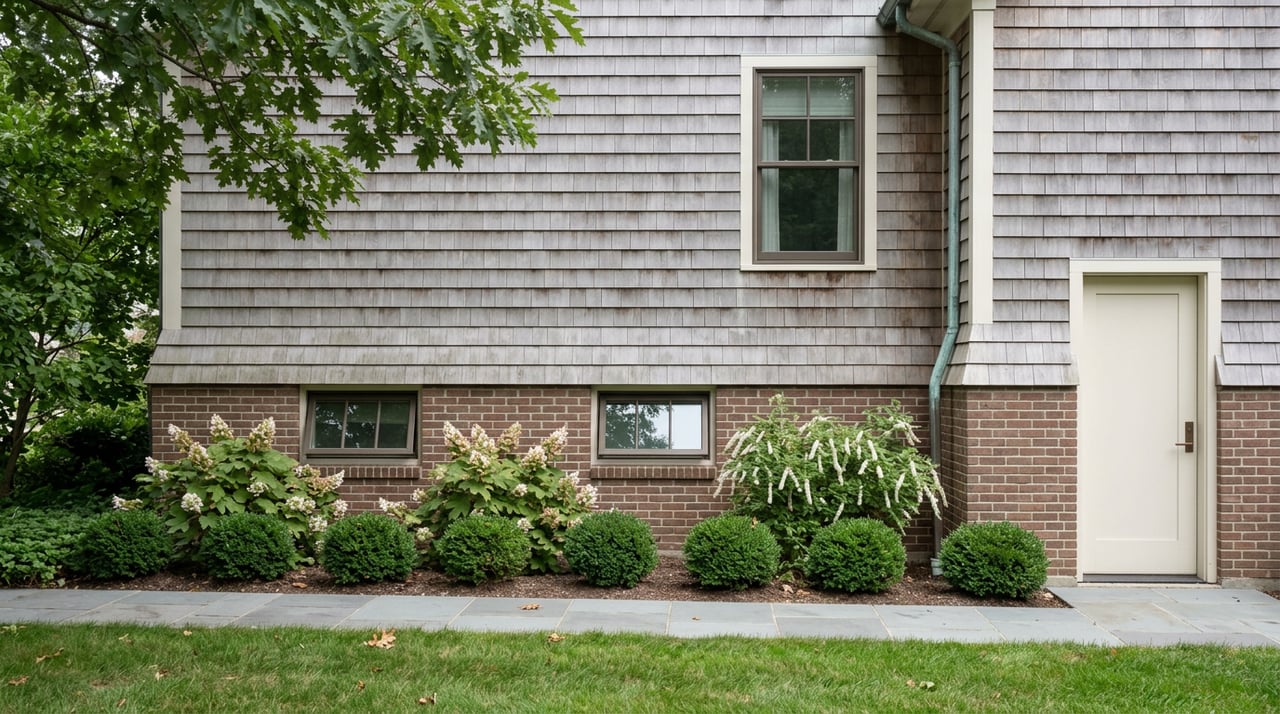
Buried Oil Tank Disclosure Before a Manhasset Hills Sale
A seller in Manhasset Hills gets an accepted offer, moves through inspection without incident, and clears attorney review. Then, during a routine title search or a lender's final checklist, someone asks a question that was never on the listing sheet: was there ever an oil tank buried on this property. The seller does not know. The house has had gas heat for as long as they can remember. But the house was built in an era when oil was the only heat there was, and "I don't know" is not the answer a title company or a mortgage underwriter wants to hear two weeks before closing.
This is not a hypothetical risk specific to one unlucky address. It is a structural feature of buying and selling in this particular pocket of the North Shore, and it traces directly back to when the neighborhood was built.
Much of Manhasset Hills went up fast, in a single wave, in the late 1950s. One of the last large parcels to be developed was the Cherrywood Homes tract, a 24-acre parcel that Barney and Martin Spiegel built out with 88 split-level houses designed by A.H. Salkowitz. The New York Times covered the project in May 1957, describing a builder putting up dozens of split-levels on one of the last open tracts left in the hamlet. By the time that wave of construction was finished, the neighborhood's housing stock was largely set. That is the same split-level and "Splanch" architecture still showing up in listings across the Herricks School District today, on streets like Robby Lane and throughout the blocks feeding into Denton Avenue School and Herricks Middle School.
Here is why that construction date matters more than it sounds like it should. Homes built before natural gas became the dominant and cheaper heating fuel in the 1970s were built on oil. Many of those houses converted to gas over the following decades, but the underground tank that fed the original oil burner did not always leave with the conversion. It was common practice to simply disconnect the lines, cap the fill pipe, and leave the tank in the ground. Nobody was required to test it, remove it, or document what happened to it. That practice was legal at the time and it is the reason a house that has run on gas for thirty years can still have a decaying steel tank sitting under the side yard.
A neighborhood built in one concentrated burst in the late 1950s has more of these tanks per square mile than a neighborhood that grew gradually across decades with a mix of gas and oil construction from the start. That is the piece the portal listing photos do not show you.
New York requires sellers of residential property to complete a Property Condition Disclosure Statement before a buyer signs a binding contract. The form asks directly whether there are, or ever have been, fuel storage tanks above or below ground on the property, whether they are currently in use, and whether they are leaking or have ever leaked. Sellers answer yes, no, or unknown for each question, and the certification they sign attaches real legal weight to whatever they check.
This is where sellers in older housing stock get into trouble. Checking "no" when the honest answer is "I actually don't know" is the kind of gap that creates liability down the line, not protection from it. Checking "unknown" is not a failing grade. It is the accurate answer for a lot of Manhasset Hills sellers who bought a house already converted to gas and never had reason to ask what happened to the original tank. The problem is waiting until attorney review to figure that out, rather than settling it before the listing goes live.
Nassau County adds another layer that a lot of sellers do not realize applies to them. New York delegates heating oil tank oversight to only three counties statewide: Nassau, Suffolk, and Westchester. Nassau's Department of Health publishes its own fee schedule for the companies that handle this work, capping tank testing fees at $555 per site per day and abandonment or removal fees at $450 for smaller tanks up to $1,100 for larger ones. Those numbers are useful for budgeting, but the deeper point is that Nassau treats this differently than most of the country. A tank that would be a footnote in another state is a documented regulatory category here.
If there is a tank, or was one, the single most important number in the entire transaction is the result of a soil test. A soil test costs somewhere between $200 and $600, and it answers exactly one question: has the tank leaked petroleum into the surrounding ground. That answer determines almost everything downstream.
| If the soil tests clean | If the soil shows contamination |
|---|---|
| Tank removal typically runs from roughly $2,500 depending on size and access | Remediation can run $8,000 to $15,000 or more |
| Closing proceeds on the normal timeline | Closing is delayed while a cleanup plan is filed and completed |
| Lender and title concerns are resolved | Lender may hold the file until contamination is addressed |
The depth of the sample matters as much as the test itself. A typical underground tank sits seven to eight feet down, and a technician who only samples at three or four feet is testing the soil above the tank, not around it. Since oil leaks from holes at the bottom and sides, a shallow sample can come back clean while the ground six feet down is saturated. A seller who orders the cheapest available soil test and gets a clean result may still be sitting on a problem, simply because nobody looked deep enough to find it.
Even a tank that has never leaked can stall a sale, because the presence of a buried tank changes how a buyer's financing and insurance actually work. Most mortgage lenders are reluctant to approve a loan on a property with a known underground oil tank still in place, and a growing number of homeowners insurance carriers are similarly hesitant to write a policy until the tank is addressed. This is not a Manhasset Hills quirk. It is a national lending pattern that lands harder here because more of the neighborhood's original housing stock was built during the exact years when nearly every new home ran on oil.
The buyer's attorney is going to ask the tank question whether or not the seller raised it first. The only real choice a seller has is whether that conversation happens calmly, before the house is on the market, or urgently, during a thirty-day attorney review window with a closing date already on the calendar.
If your Manhasset Hills home was built anywhere near the late 1950s development wave, the practical move is to settle the tank question before you list, not after you get an offer. A sweep and, if warranted, a properly deep soil test gives you documentation to hand a buyer's attorney on day one instead of a gap in your disclosure that invites a renegotiation two weeks before closing. If a tank turns up and the soil is clean, you have turned a potential deal-killer into a line item. If it turns up and there is contamination, you have the time to manage remediation on your own schedule instead of the buyer's.
This is exactly the kind of preparation that belongs in a launch plan built around your specific house rather than a generic pre-listing checklist. A property built in 1958 needs a different pre-listing conversation than one built in 1998, and the tank question is the clearest example of why.
Do I have to remove a buried oil tank before selling in Manhasset Hills? There is no state or county law requiring removal simply because a tank exists. In practice, most buyers, their attorneys, and their lenders will ask for it to be resolved, whether that means removal, proper abandonment in place, or documented soil testing showing the tank never leaked.
What if I genuinely don't know whether my house ever had oil heat? Mark the disclosure form honestly as unknown rather than guessing no. A tank sweep is a reasonable next step before you list, since it turns an unknown into a documented fact you control the timing of.
Who pays if the tank is found to have leaked? Environmental liability generally follows the property, not the person who caused the original leak decades ago. That is exactly why sellers benefit from finding out the answer before a buyer's attorney does.
If you are preparing to list a Manhasset Hills home built in that original 1950s wave, or you are under contract and the tank question just came up, Annie Holdreith can help you get ahead of it with a pre-listing plan built around your property's actual age and systems. Request a personalized valuation and launch plan to start the conversation before it becomes a closing-day surprise.
Stay up to date on the latest real estate trends.




In a competitive real estate market, Annie is the Trusted Real Estate Advisor who will guide you to success. When you work with her, you have a calm, respected, seasoned professional with a proven track record by your side every step of the way.

Annie Holdreith
[email protected]
516.509.4082
License #10301201745
364 Plandome Rd Manhasset NY 11030