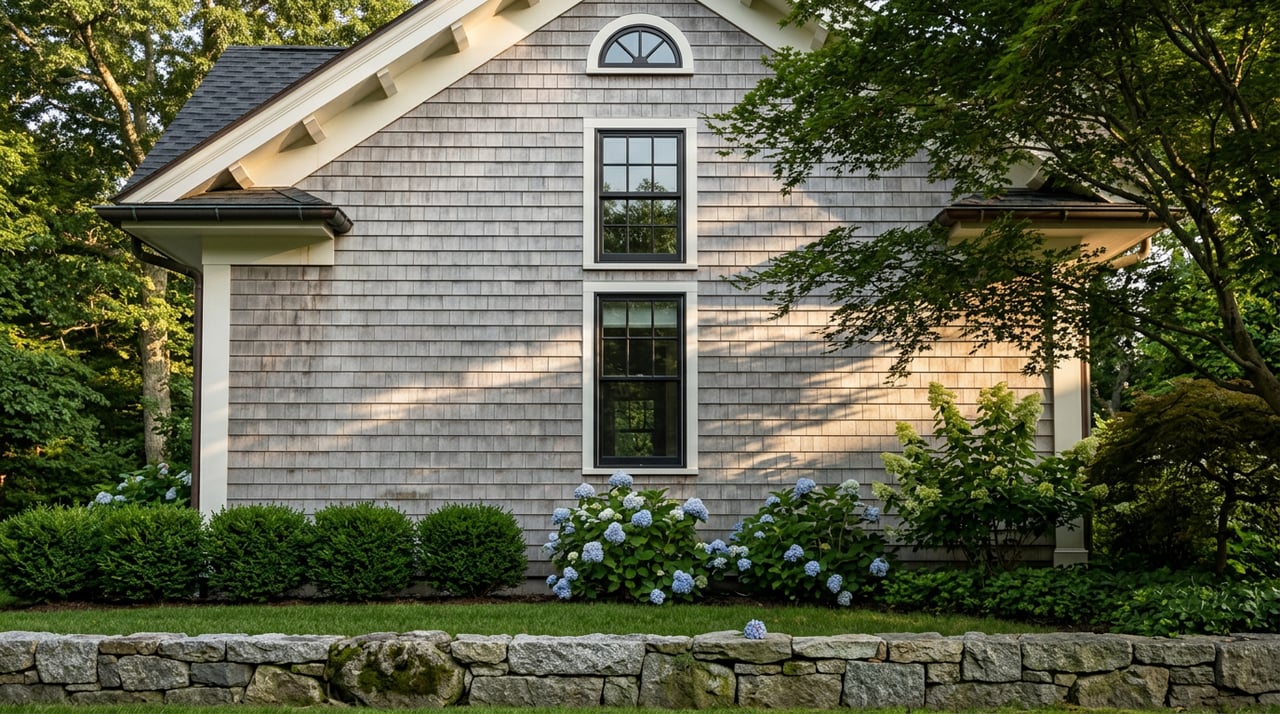
Selling a Home in Locust Valley Without Costly Surprises
Two houses with the same "Locust Valley, NY 11560" mailing address can run entirely different closings. One sits inside the Incorporated Village of Matinecock and answers to a building department open three days a week. The other sits in the unincorporated hamlet and answers to the Town of Oyster Bay. Same postal town, same school district, different rulebook, different timeline, different price band.
For sellers, the mailing address is the least useful field on the tax bill. The village line is the one that governs your preparation.
The 11560 ZIP code overlays at least four separate governing bodies, and the parcel, not the road name, decides which one you file with. Before pricing, before staging, before photography, a Locust Valley seller needs to confirm which of the following controls the property:
Each of these bodies issues its own certificates of occupancy, tracks its own open permits, and has its own inspection queue. A seller who assumes "Locust Valley" is a single administrative unit and orders one records search often discovers, three weeks into the process, that the correct file cabinet is somewhere else.
The friction that catches the most sellers off guard sits inside Matinecock's fee schedule. Under Chapter 64 of the Village Code, the building permit fee equals one percent of the estimated cost of construction, and the Village sets a floor on that estimate. For a new single-family dwelling, the minimum construction cost used for the fee calculation is $250 per square foot. For an addition, it is $200 per square foot. And if work is discovered to have been performed without a validly issued permit, those fees are doubled, with escalating penalties on subsequent violations that can reach $7,500 to $10,000.
In practical terms, an unpermitted 400-square-foot addition a prior owner completed a decade ago is not a small line item to clear before closing. Run through the Village formula, it looks like this:
| Item | Estimated construction cost | Base permit fee (1%) | Doubled if unpermitted |
|---|---|---|---|
| 400 sf addition | $80,000 | $800 | $1,600 |
| 1,000 sf finished basement conversion | Village-set minimum applies | Variable | Variable |
| Swimming pool | Village minimum $750 | $750 | $1,500 |
| Deck or masonry patio | $20/sf or $250 minimum | Variable | Doubled |
Fees are not the real cost. Time is. Filing an after-the-fact permit means a survey update, engineered drawings for anything structural, a Village inspection, and a slot in a three-day-a-week department calendar. Sellers who identify open permits before they call a stager compress the process. Sellers who discover them at the buyer's title search do not.
Matinecock's tree removal permit is a smaller version of the same issue. The tree warden must inspect ribboned trees before removal, which means "clearing sightlines for the drone photography" is a two-week task, not a weekend one.
A large share of the estate-tier housing stock in Matinecock and Lattingtown, and a real share of the hamlet inventory, operates on private septic or older cesspools rather than public sewer. That is a disclosure question, not just a mechanical one.
New York gives sellers a choice on the Property Condition Disclosure Statement that most sellers, and quite a few agents, use reflexively without doing the math:
A seller may disclose known conditions on the statutory form, or offer the buyer a $500 credit at closing in lieu of completing it. The credit does not extinguish liability for known, undisclosed material defects.
On a Locust Valley cesspool that is nearing end of life, the $500 credit is often the wrong instinct. A pre-listing septic inspection on Long Island typically runs $300 to $900, and a full drainfield replacement can exceed $20,000. Sellers who commission the inspection, complete a truthful PCDS, and put pumping records in the disclosure package take control of the negotiation. Sellers who take the $500 exit invite the buyer's inspector to define the number instead. Nassau County's S.E.P.T.I.C. program offers rebate context for buyers considering an upgrade, which is a talking point worth putting into your listing packet if your system is aging but sound.
The other layer worth surfacing: waterfront and near-waterfront parcels along Mill Neck Creek in Lattingtown carry flood insurance implications that sit outside the septic conversation but arrive at the same negotiation table. Elevation drives premium, and the premium drives the buyer's net-of-carry math.
Locust Valley has a portal problem. As of July 2026, one national portal put the Locust Valley median list price at $2.02M with a median 45 days on market, a figure down 13% year over year. A separate portal put the recent Locust Valley median sale price at $1.1M for the trailing month it measured. Both numbers are defensible. Neither is useful without disaggregation.
The gap is not noise. It is a bimodal market that the "Locust Valley" label collapses into a single median that describes almost no actual home. A cleaner read looks like this:
| Sub-market | Approximate median (2026) | What that price represents |
|---|---|---|
| Village of Matinecock | ~$2.60M | Two-plus acre lots, estate infrastructure, private roads |
| Village of Lattingtown | ~$1.45M | Larger lots, beach association access, mixed vintages |
| Locust Valley hamlet | Sub-$1.5M common | Walkable village, smaller lots, pre-1960 stock |
| Active listing range | $499K to $12.25M+ | Confirms bimodal, not unimodal, distribution |
The signal at the top end is instructive. A Birch Hill Road listing in Lattingtown recently carried a $150,000 price reduction on a $12.25M ask, which tells you the estate tier is negotiating on real spreads, not asking-price theatrics.
The seller consequence is direct. A hamlet owner who anchors to the $2.02M portal median lists high, sits through the 45-day median, and chases the market down. A Matinecock estate owner who anchors to the $1.1M sale median leaves money on the table before the first showing. The right comparable set is drawn from the parcel's own village, its own lot size band, and its own septic and permit profile, not from the town line.
At the offer stage, these three inputs stop being separate. A buyer's attorney sees a Matinecock parcel with two open permits, an aging cesspool, and a comparable set the listing agent drew from the Lattingtown median. Each item on its own is negotiable. Together, they compound into a repricing event, usually two weeks before scheduled closing, when the seller has the least leverage.
The preparation sequence that avoids that outcome is not complicated. Pull the correct village records first. Reconcile permits on the Village's calendar, not the buyer's. Inspect the septic before the listing photos are taken. Comp the home against its village, not its ZIP code. Sellers who do those four things in that order tend to close on the terms they signed.
How do I confirm which village my Locust Valley parcel is in? The tax bill lists the taxing jurisdictions. If Matinecock, Lattingtown, or Mill Neck appears as a line item, the parcel is inside that incorporated village. If only Town of Oyster Bay appears, the parcel is in the unincorporated hamlet.
Does the $500 disclosure credit release me from liability? No. The credit substitutes for completing the statutory disclosure form. It does not release a seller from liability for known, undisclosed material defects. Your attorney will speak to the specifics of your situation.
Should I take care of open permits before listing, or negotiate them at contract? In Matinecock, the doubled-fee schedule and limited department hours make pre-listing reconciliation the shorter path. In the hamlet, Town of Oyster Bay timelines are also non-trivial. Either way, the parties who discover the issue at title search are the ones who pay for it, in dollars or in days.
Is a bimodal median a Locust Valley-only problem? No, but it is unusually pronounced here because the estate-tier villages and the walkable hamlet share the same postal identity and the same school district. Most Nassau ZIPs collapse into cleaner unimodal distributions.
If you are preparing to sell a home in Matinecock, Lattingtown, Mill Neck, or the Locust Valley hamlet, the pre-listing sequence matters more than the launch date. Annie Holdreith, of Daniel Gale Sotheby's International Realty, works through the village records, the septic file, and the comparable set before pricing the property, so that the number on the listing sheet is the number that closes. Request a personalized valuation and launch plan to see how your parcel actually prices against its own village.
Stay up to date on the latest real estate trends.
In a competitive real estate market, Annie is the Trusted Real Estate Advisor who will guide you to success. When you work with her, you have a calm, respected, seasoned professional with a proven track record by your side every step of the way.
Annie Holdreith
[email protected]
516.509.4082
License #10301201745
364 Plandome Rd Manhasset NY 11030