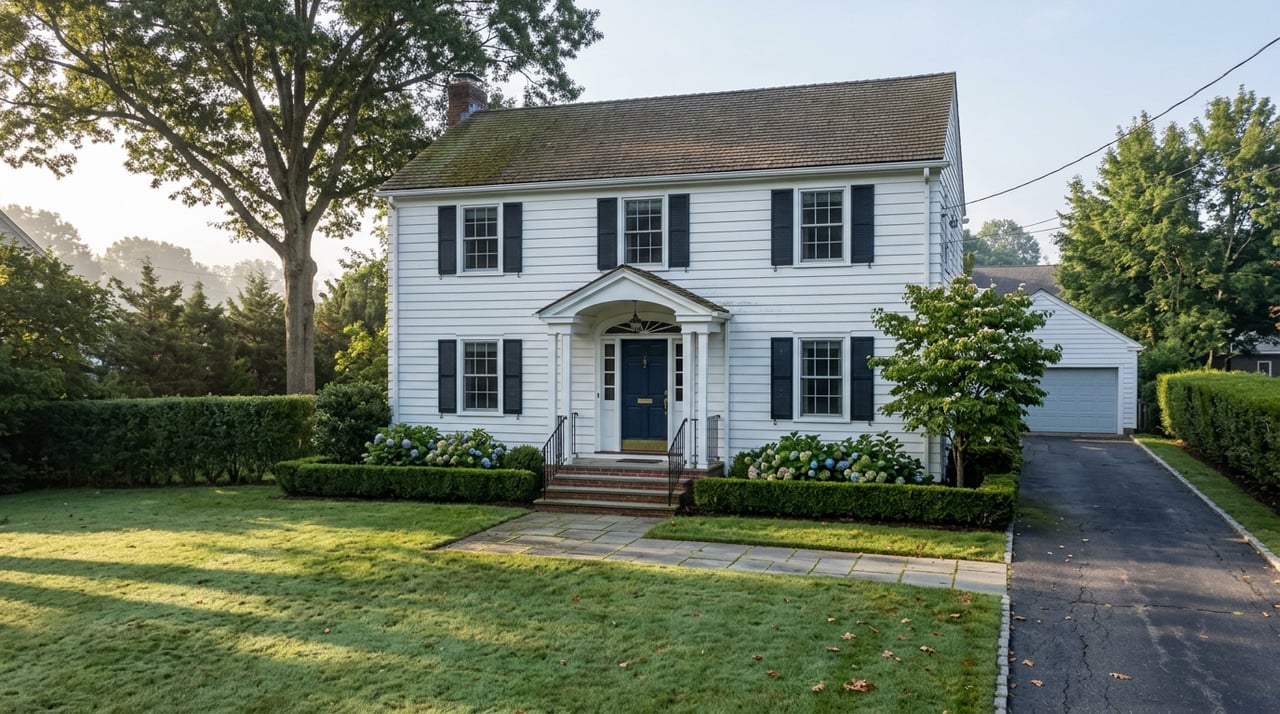
Before You List in Manhasset, Know Which Year Your Tax Bill Is Really From
A buyer walks through a Manhasset colonial, falls for the kitchen, and then flips to the listing sheet to check the property tax line. The number looks reasonable. What they don't know is that the number is not really about this house, or this year. It's a number Nassau County assigned to the property back around 2020, and in most cases it has not moved since.
That gap between what a home is assessed at and what it would actually sell for today is the single most misunderstood line item in a Manhasset transaction. It shapes how buyers read affordability, how sellers should think about disclosure, and what a long-term owner should expect five or ten years down the road. None of it shows up on a portal listing. All of it belongs in the conversation before you list.
Nassau County is required to update its assessment roll every year. Since the 2020-21 tax year, it largely hasn't. The freeze was reinstated during the pandemic and has carried through multiple filing cycles since, which means the assessed value attached to most Manhasset homes still reflects what the county thought the property was worth roughly five years ago, not what it's worth in a 2026 market that has moved considerably in that time for North Shore luxury and waterfront stock.
Here's the part that trips up out-of-town buyers especially: in states that use a transfer-based system, like California's Proposition 13, a sale triggers a fresh reassessment tied to the purchase price. Nassau County works the other way. A sale here does not reset anything. The buyer simply inherits whatever assessed value and tax bill the seller was already paying. If the freeze is still in effect at closing, that inherited number stays exactly as it was, regardless of what anyone paid for the house.
That has a direct effect on how a buyer should read the tax line on a Manhasset listing. It is not a signal of the county's current opinion of the home's value. It's closer to a legacy number, carried forward until the county decides to touch the roll again.
The median annual property tax bill in Manhasset runs around $6,059, against a median effective tax rate of about 0.45 percent, both well below what the same dollar figure would suggest if the county's estimate of market value actually reflected today's prices. For homes that have appreciated 30, 40, or even 50 percent since 2020, which describes a meaningful share of the North Shore's higher end, the assessed value and the real market value have simply drifted apart.
That drift is not unique to Manhasset. It runs across the same tier of North Shore towns: Port Washington, Garden City, Roslyn, Plandome, Old Westbury, Locust Valley, and Sands Point are all carrying some version of the same lag. For a buyer comparing towns on tax bill alone, that's a trap. Two homes at similar price points in similar towns can show wildly different tax figures depending on how each one's assessment happened to land back in 2020, not because one town runs a lower rate than the other.
For a seller, the practical upside is real. A buyer looking at a Manhasset home with a modest, frozen tax bill is buying that number as it stands today, not a future increase tied to what they paid. That's worth stating plainly during negotiations rather than leaving it for the buyer's agent to figure out later.
Every year, Nassau County gives homeowners a window to challenge their assessment through the Assessment Review Commission. For the 2027-28 tax year, that window ran from January 2 through the extended deadline of March 31, 2026, and it has already closed. The next opportunity, covering the 2028-29 tax year, opens January 2, 2027.
That timing matters more for sellers than it first appears. A successful grievance lowers the assessed value, and therefore the tax bill, for the tax year it applies to. But the filing has to be made by whoever owns the home at the time, and the benefit often lands after a sale has already closed. In other words, a seller who does the work of building a strong grievance case, gathering comparable sales, documenting any condition issues, may end up handing that lower tax bill to the next owner rather than collecting the savings themselves.
That's not a reason to skip it. It's a reason to be deliberate about it. A few things worth knowing if you're listing in Manhasset:
The freeze will not last forever, though nobody has a firm date for when Nassau County unfreezes the roll. When it does, homes that have appreciated the most since 2020 will see their assessments rise to catch up, and their tax bills will rise with them.
The one piece of real protection here is New York's Real Property Tax Law, which caps how fast any single increase can hit a homeowner once a reassessment happens. Under that law, a residential assessment increase is limited to 6 percent in any given year, with an overall cap of 20 percent phased in over five years. So a home that's currently assessed well below its true market value won't see the full jump land in one bill. It gets absorbed gradually.
That matters for anyone thinking past the next few years. A buyer purchasing a Manhasset home today inherits a 2020-vintage assessment. If they hold that home for a decade, they will almost certainly see the roll unfreeze at some point during their ownership, and the size of that eventual adjustment depends heavily on how much the home has appreciated relative to where its assessment currently sits. For sellers of homes that have appreciated sharply, that's a fact worth raising candidly rather than letting a buyer discover it three years into ownership.
The tax line on a Manhasset listing sheet tells a buyer what they'll pay this year and probably next. It does not tell them what the county actually believes the home is worth, and it says nothing reliable about what happens once the freeze lifts. Treating that number as settled, in either direction, misses the more useful conversation: where does this specific home's assessment sit relative to its real market value today, and what does that mean for the person buying it.
For sellers, that's a due diligence step worth doing before the sign goes in the yard. Pull the current assessed value, compare it against recent comparable sales in the neighborhood, and have a clear answer ready when a buyer's agent asks about the tax bill. That answer, delivered plainly and early, tends to build the kind of trust that keeps a negotiation moving forward instead of stalling over a number nobody explained.
Does buying a Manhasset home reset the tax assessment to the sale price? No. Nassau County's assessed value stays attached to the property, not the transaction. As long as the countywide freeze continues, a sale does not trigger a new assessment.
If I file a grievance now, when does the savings show up? It applies to the specific tax year tied to that filing window, roughly sixteen months out. The window that just closed on March 31, 2026 covers the 2027-28 tax year. The next filing period, for 2028-29, opens January 2, 2027.
Is there any risk to filing a grievance? No. The Assessment Review Commission can lower an assessment or leave it unchanged. It has no authority to raise it based on a filed grievance.
If you're weighing when to list a Manhasset home, or trying to read what a specific property's tax picture actually means for your asking price, that's exactly the kind of detail worth working through before the first showing. Annie Holdreith can walk through your home's assessment relative to current market value and build a launch plan around it. Request a personalized valuation and launch plan to start that conversation.
Stay up to date on the latest real estate trends.





In a competitive real estate market, Annie is the Trusted Real Estate Advisor who will guide you to success. When you work with her, you have a calm, respected, seasoned professional with a proven track record by your side every step of the way.

Annie Holdreith
[email protected]
516.509.4082
License #10301201745
364 Plandome Rd Manhasset NY 11030